
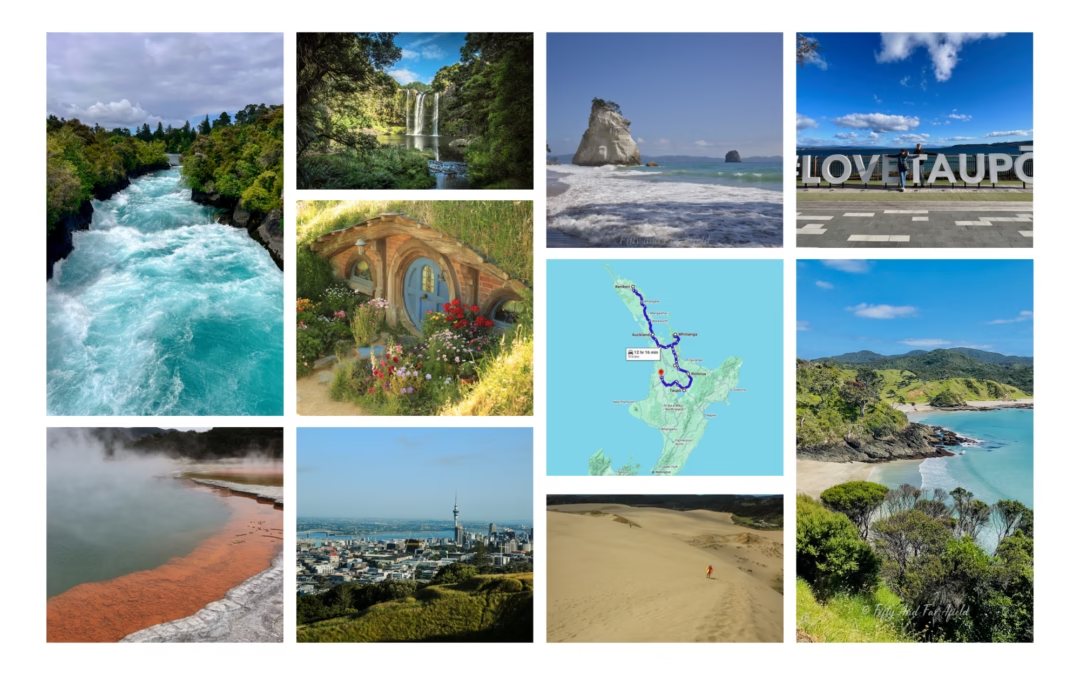
The North Island packs an enormous range of landscapes into a compact space — from white to black sand beaches, geothermal fields, ancient caves, film sets, and a coastline that changes character every few hours of driving. The hard part isn't finding things to do. It's deciding how much time you actually need.
This North Island New Zealand Itinerary gives you three route options, built around the same core loop out of Auckland. Pick the one that matches your timeframe, then adjust as you go.
How to use this guide
- 7 days — the essential loop. Coromandel, Hobbiton, Rotorua, Taupō, Waitomo.
- 10 days — the same route with breathing room, plus a detour west to Taranaki.
- 14 days — the full loop, adding Bay of Islands in the north and a decision point near Taranaki: continue to Wellington for the South Island, or head back to Auckland.
Each itinerary includes a day-by-day table, optional detours, and driving notes so you know what's realistic and what's a stretch.

A shorter North Island New Zealand itinerary loop from Auckland via Whitianga, Matamata, Rotorua, Taupō and Waitomo Caves — 826 km and around 10 hours 42 minutes of driving. Map data ©2026 Google.
7-Day Itinerary
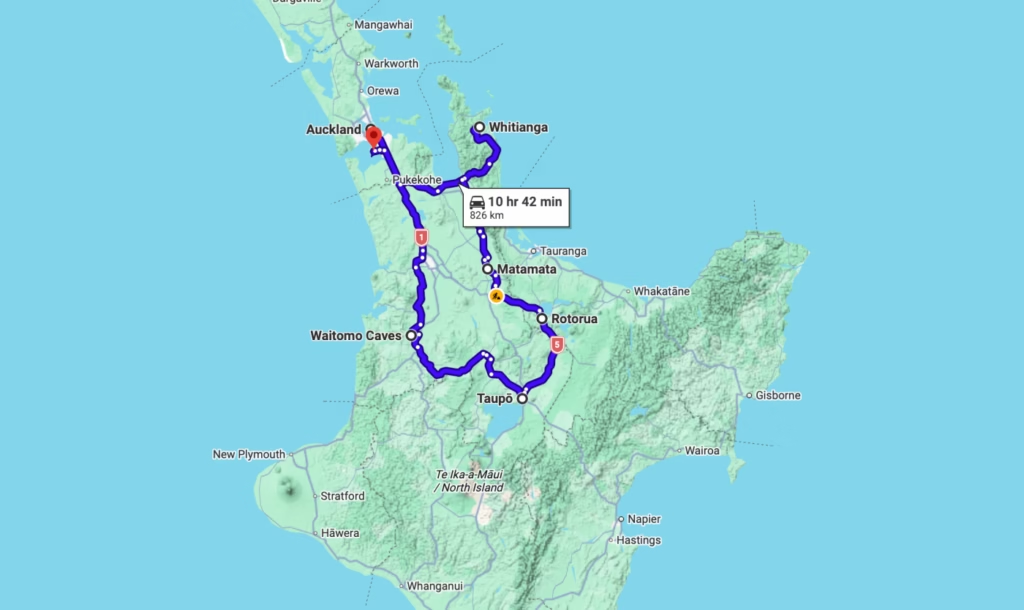
A shorter North Island New Zealand itinerary loop from Auckland via Whitianga, Matamata, Rotorua, Taupō and Waitomo Caves — 826 km and around 10 hours 42 minutes of driving. Map data ©2026 Google.
7 Days: The Essential Loop
Best for first-time visitors or anyone short on time who still wants to see the North Island's biggest highlights.
Route: Auckland → Coromandel → Hobbiton → Rotorua → Taupō → Waitomo → Auckland
| Day | Route | Driving time | Highlights |
|---|---|---|---|
| 1 | Auckland → Coromandel | ~3 hrs | Settle in, explore Whitianga or Hahei |
| 2 | Coromandel | — | Cathedral Cove, Hot Water Beach |
| 3 | Coromandel → Hobbiton → Rotorua | ~3.5 hrs total | Hobbiton tour, arrive Rotorua evening |
| 4 | Rotorua | — | Geothermal parks, Māori cultural experience |
| 5 | Rotorua → Taupō | ~1 hr | Huka Falls, lakeside walk |
| 6 | Taupō → Waitomo | ~2 hrs | Glowworm Caves |
| 7 | Waitomo → Auckland | ~2.5 hrs | Return, flight home or extra Auckland night |
Auckland
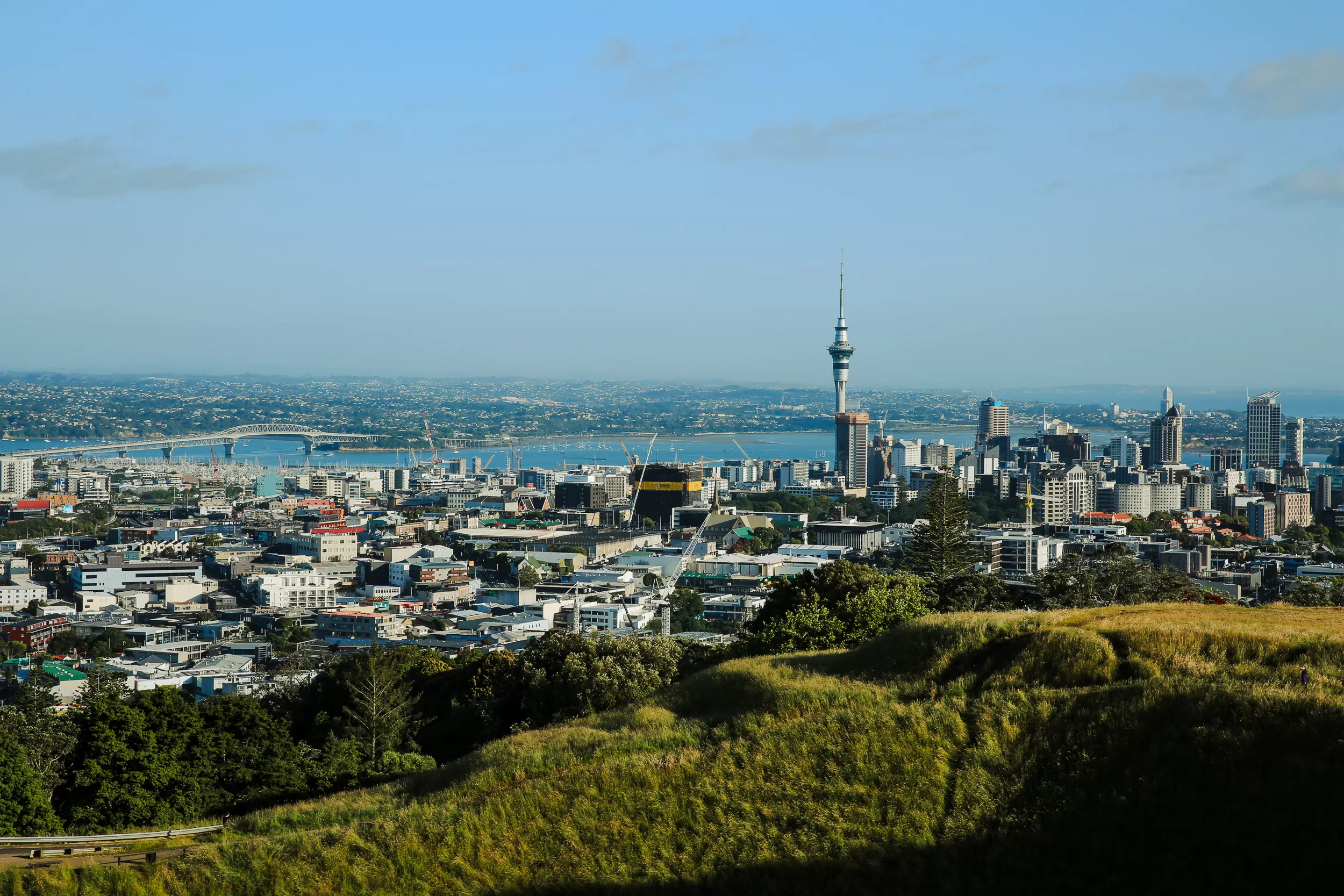
As your start and end point, Auckland is worth a night on either side of your road trip rather than rushing straight through — the Sky Tower and waterfront are an easy first taste of the city, and Waiheke Island makes for a good half-day trip if you have time to spare. If you're flying in internationally, factor in time to pick up your rental car, as the airport counters can have queues during peak arrival times. Auckland traffic is heaviest on weekday mornings and evenings, so if you're driving out at the start of your trip, an early or midday departure will save you time getting clear of the city.
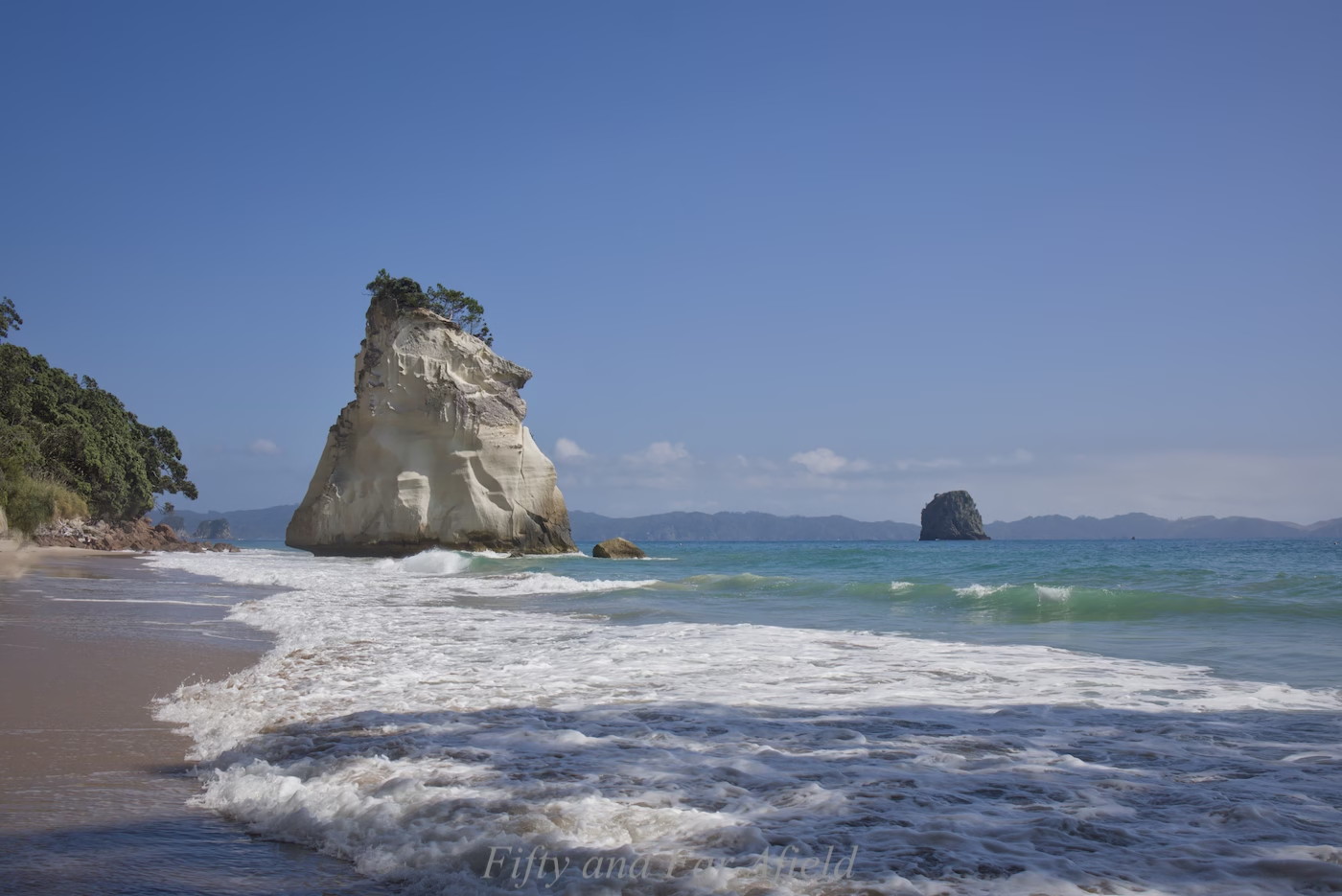
Cathedral Cove
Cathedral Cove, Coromandel Peninsula — best early morning before the crowds. Check tide times before you go (the cove access is affected by tide, similar to Hot Water Beach). Parking at the main car park fills fast in peak season; consider the shuttle from Hahei, or walk in from town if you don't mind the extra 45 minutes each way.
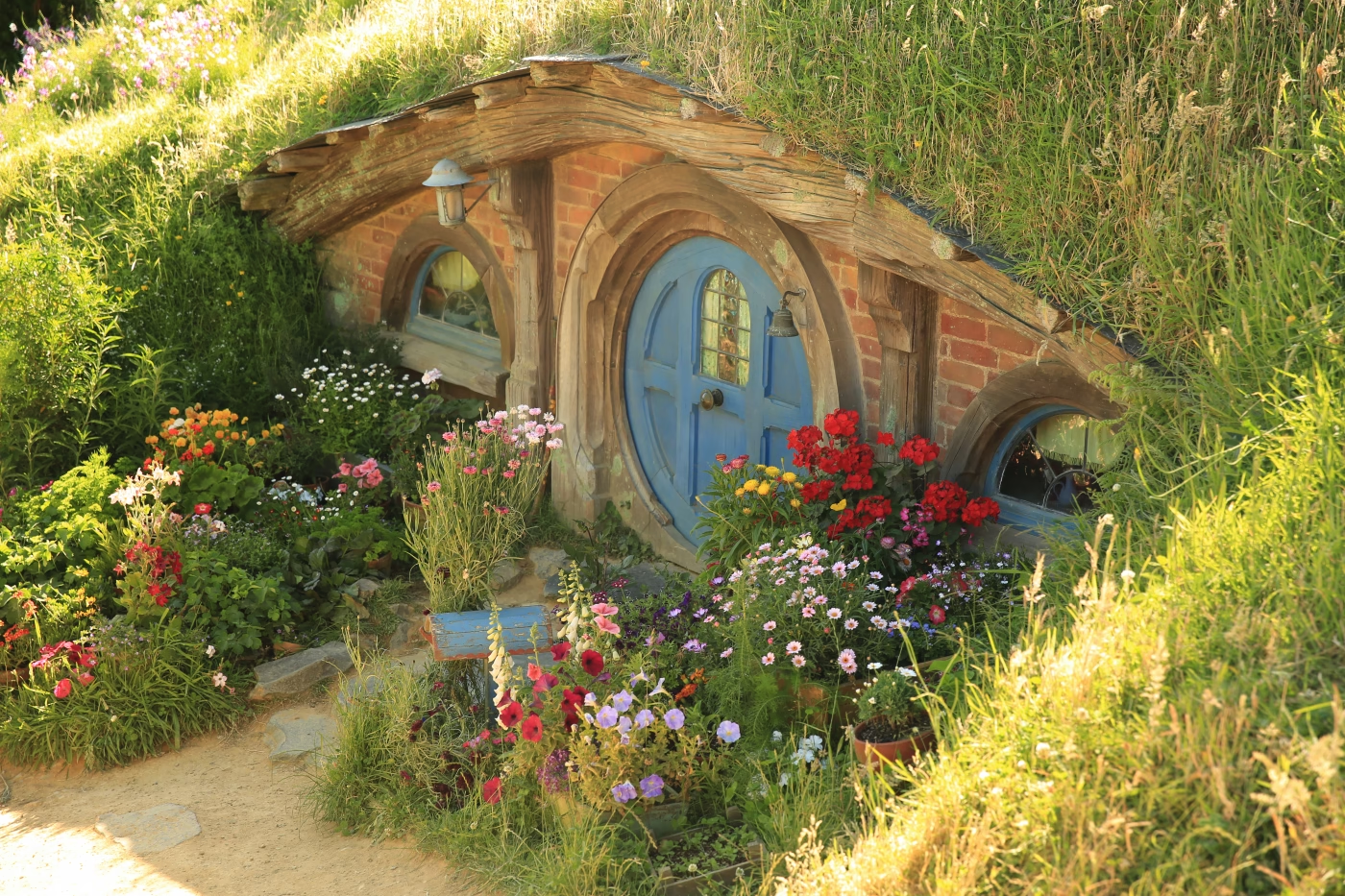
Matamata - Hobbiton
Hobbiton Movie Set is only accessible by guided tour, departing from the on-site Shire's Rest visitor centre near Matamata. Tours run around two hours and include time in the Green Dragon Inn for a drink at the end — book ahead, as slots sell out fast in peak season.
Rotorua
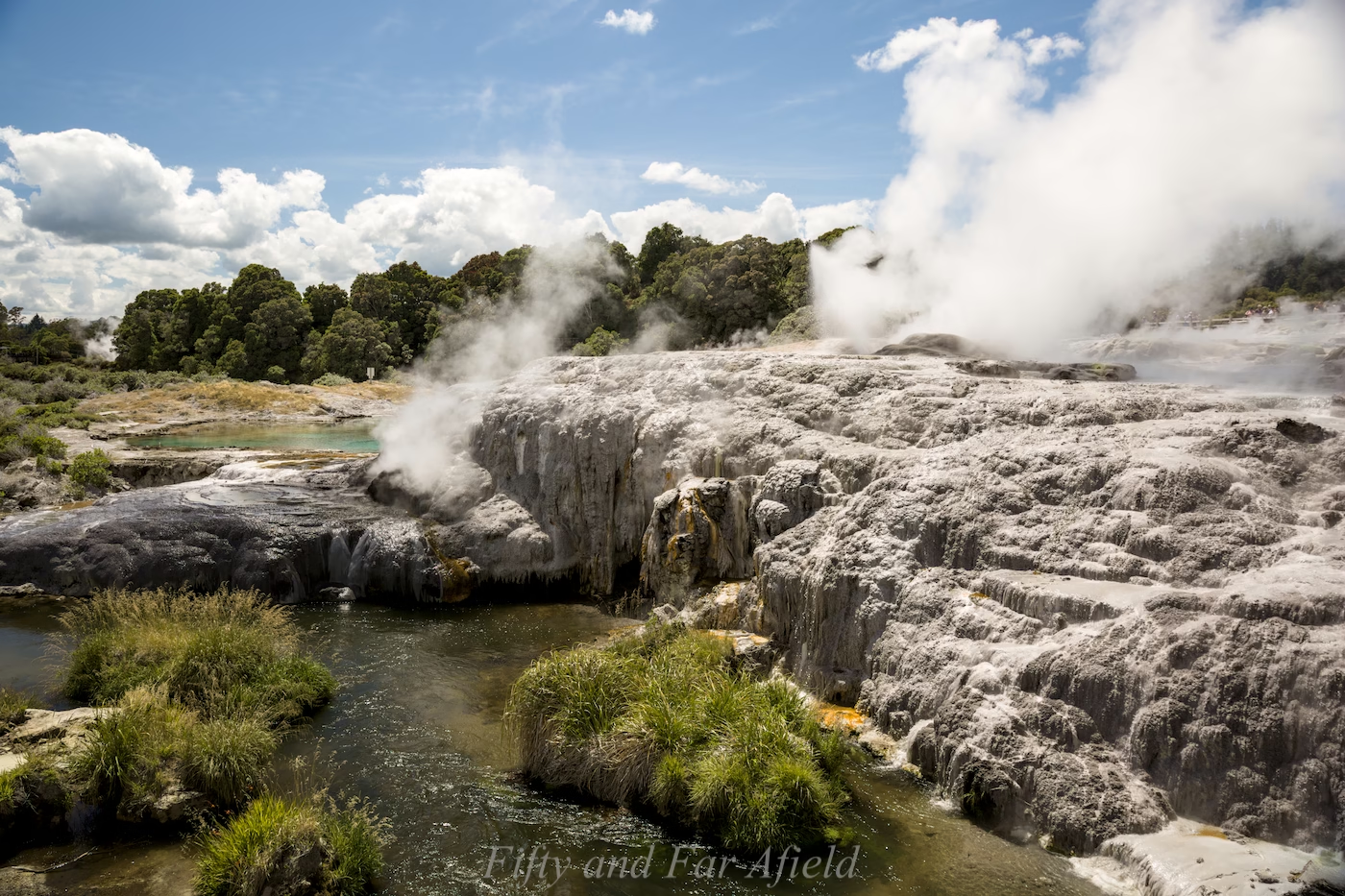
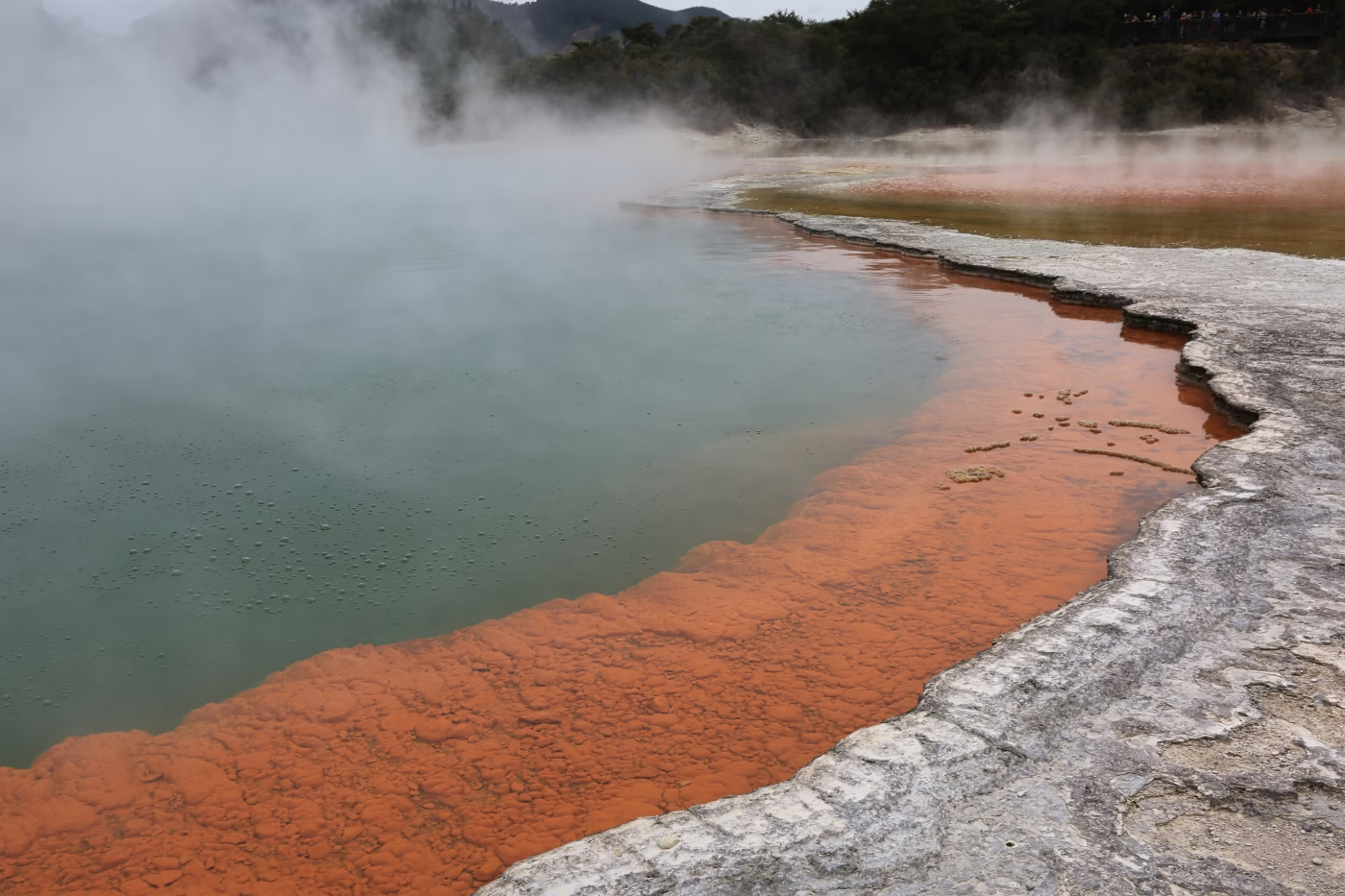
Rotorua is spread across a wider area than the other stops, so plan which geothermal park you want to visit in advance — Te Puia and Wai-O-Tapu are the two most popular, each roughly 20–30 minutes from town. A quick heads-up: the geothermal activity means a faint sulphur smell around parts of the town itself, which you get used to quickly. Māori cultural evenings typically include a hāngi dinner and performance and need to be booked ahead, especially in peak season, as they run on set schedules with limited capacity.
Waitomo
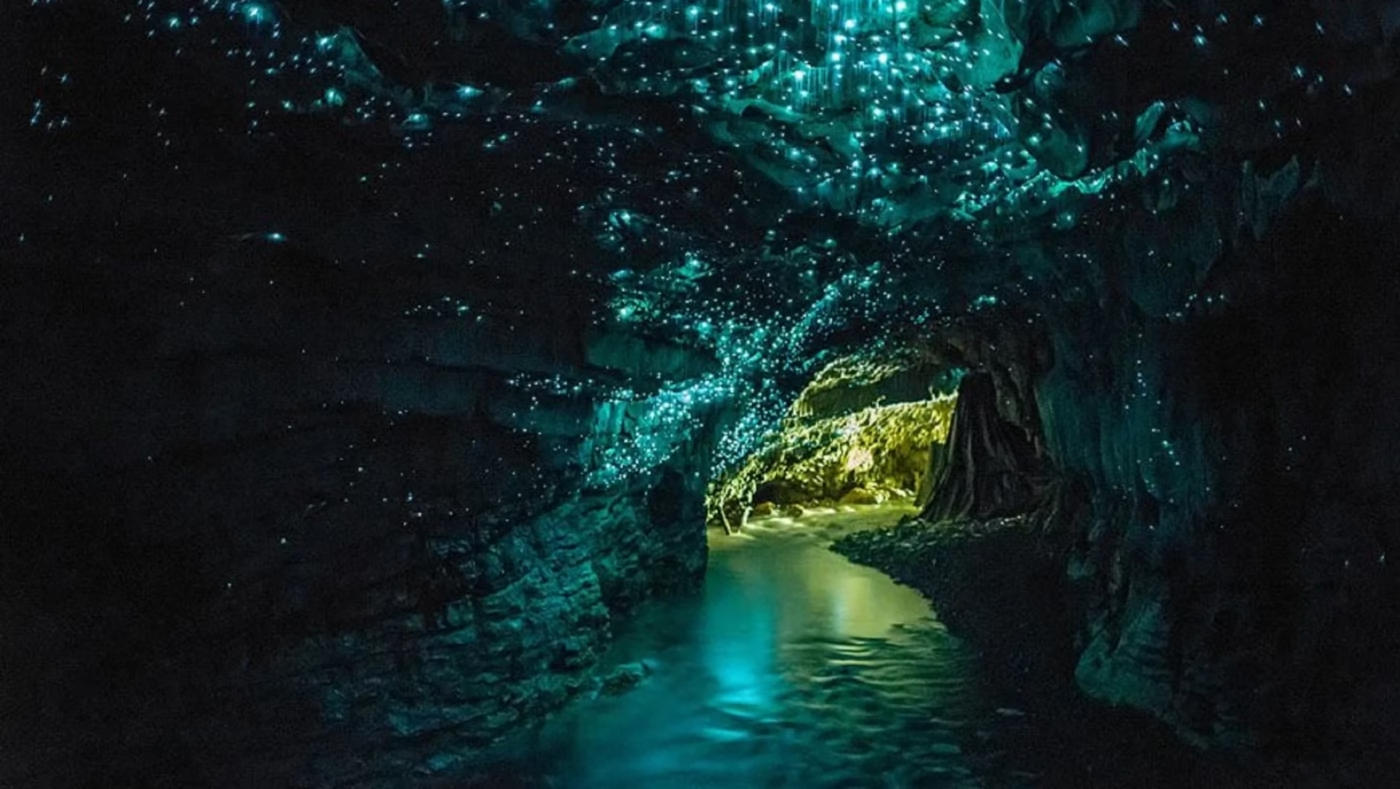
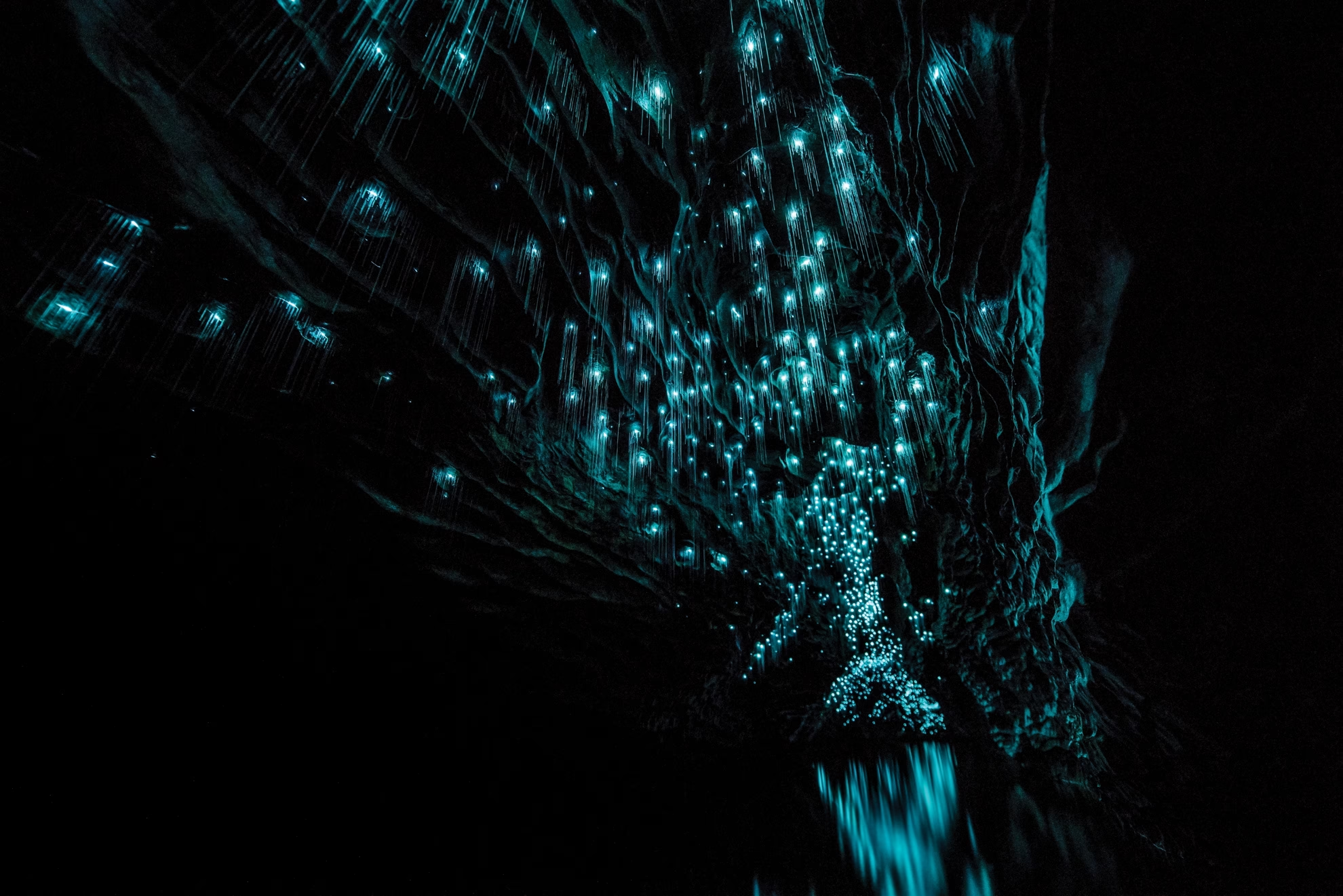
The Waitomo Glowworm Caves are best seen on the guided boat tour, which takes you silently through the cave on water beneath a ceiling of glowworms — book ahead, as tours run on a schedule and sell out in peak season. Bring a light jacket, as the caves stay cool year-round, and note that photography isn't permitted inside. For a full guide of what to see and do, see my Waitomo and west coast Waikato blog post
Worth knowing
- This is a tight route. Days 3 and 6 involve a stop plus a drive — leave early.
- Hot Water Beach and Cathedral Cove both depend on tide times — check both before planning your day, ideally the night before.
- If you're short on a full day in Rotorua, geothermal parks and a Māori cultural evening can be combined into one day.
10-Day Itinerary
10 Days: Extended Loop with Taranaki
Best for travelers who want the same core route as the 7-day loop but with more breathing room, plus a detour south to Taranaki.
A North Island New Zealand itinerary loop from Auckland via Whitianga, Rotorua, Taupō and Tongariro National Park, covering 1,084 km and around 16 h of driving. Map data ©2026 Google.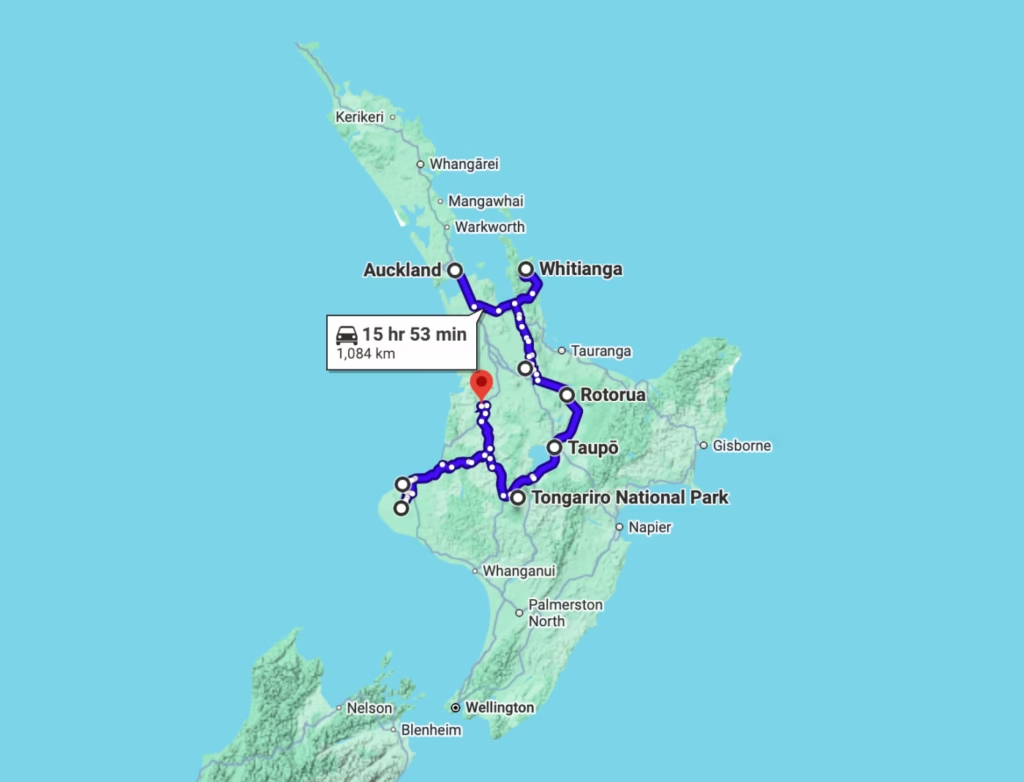
Route: Auckland → Coromandel → Hobbiton → Rotorua → Taupō → Taranaki → Waitomo → Auckland
| Day | Route | Driving time | Highlights |
|---|---|---|---|
| 1–2 | Auckland → Coromandel | ~3 hrs | Cathedral Cove, Hot Water Beach, Whitianga |
| 3 | Coromandel → Hobbiton → Rotorua | ~3.5 hrs total | Hobbiton tour, arrive Rotorua evening |
| 4–5 | Rotorua | — | Geothermal parks, Māori cultural experience, mountain biking |
| 6 | Rotorua → Taupō | ~1 hr | Huka Falls, Tongariro Alpine Crossing optional (add full day if included) |
| 7–8 | Taupō → Taranaki | ~2.5 hrs | Mt Taranaki, black sand beaches, surf towns |
| 9 | Taranaki → Waitomo | ~3 hrs | Glowworm Caves |
| 10 | Waitomo → Auckland | ~2.5 hrs | Return |
This route works well if you want depth without committing to the full 14-day loop.
Taupō
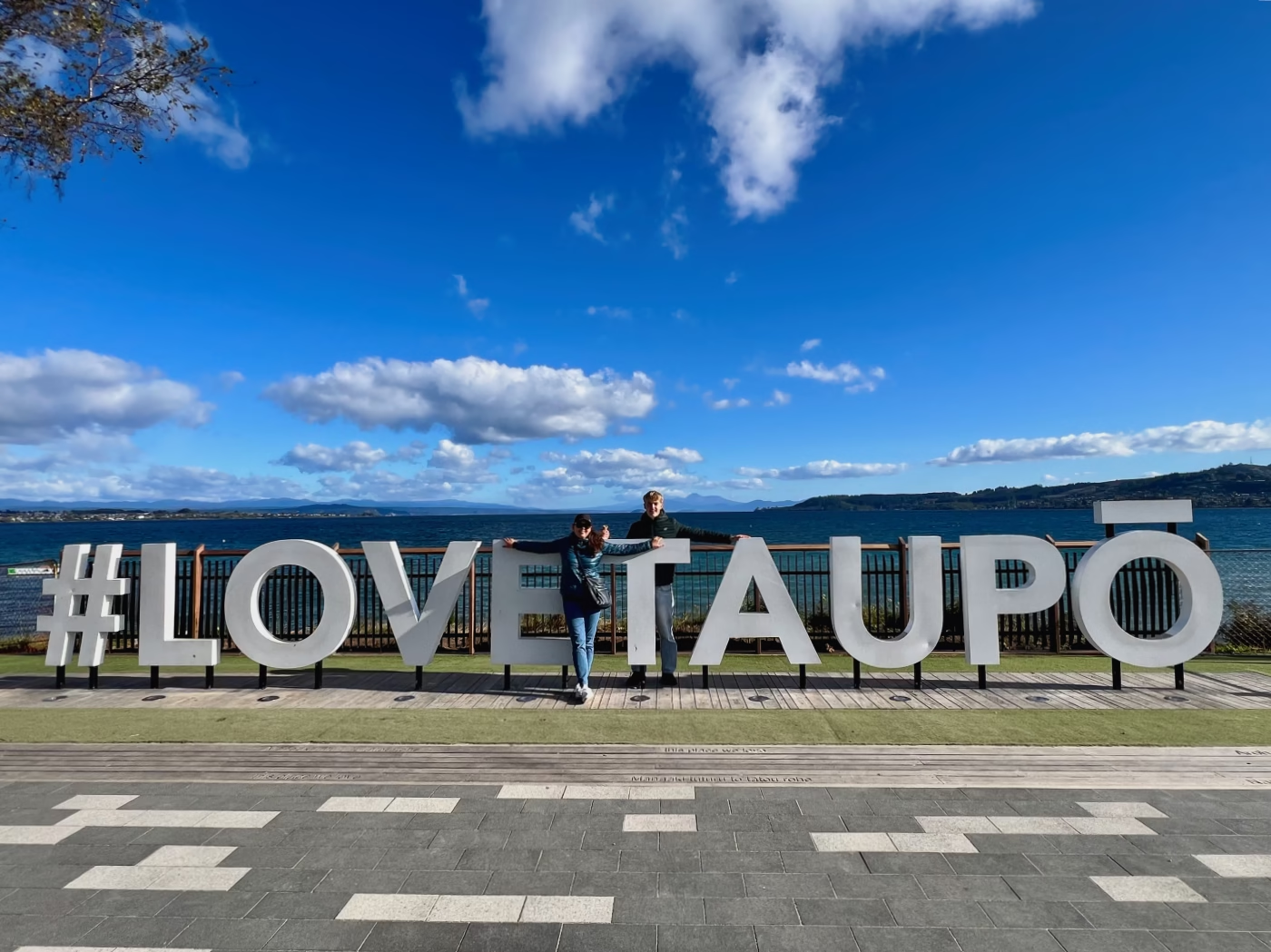
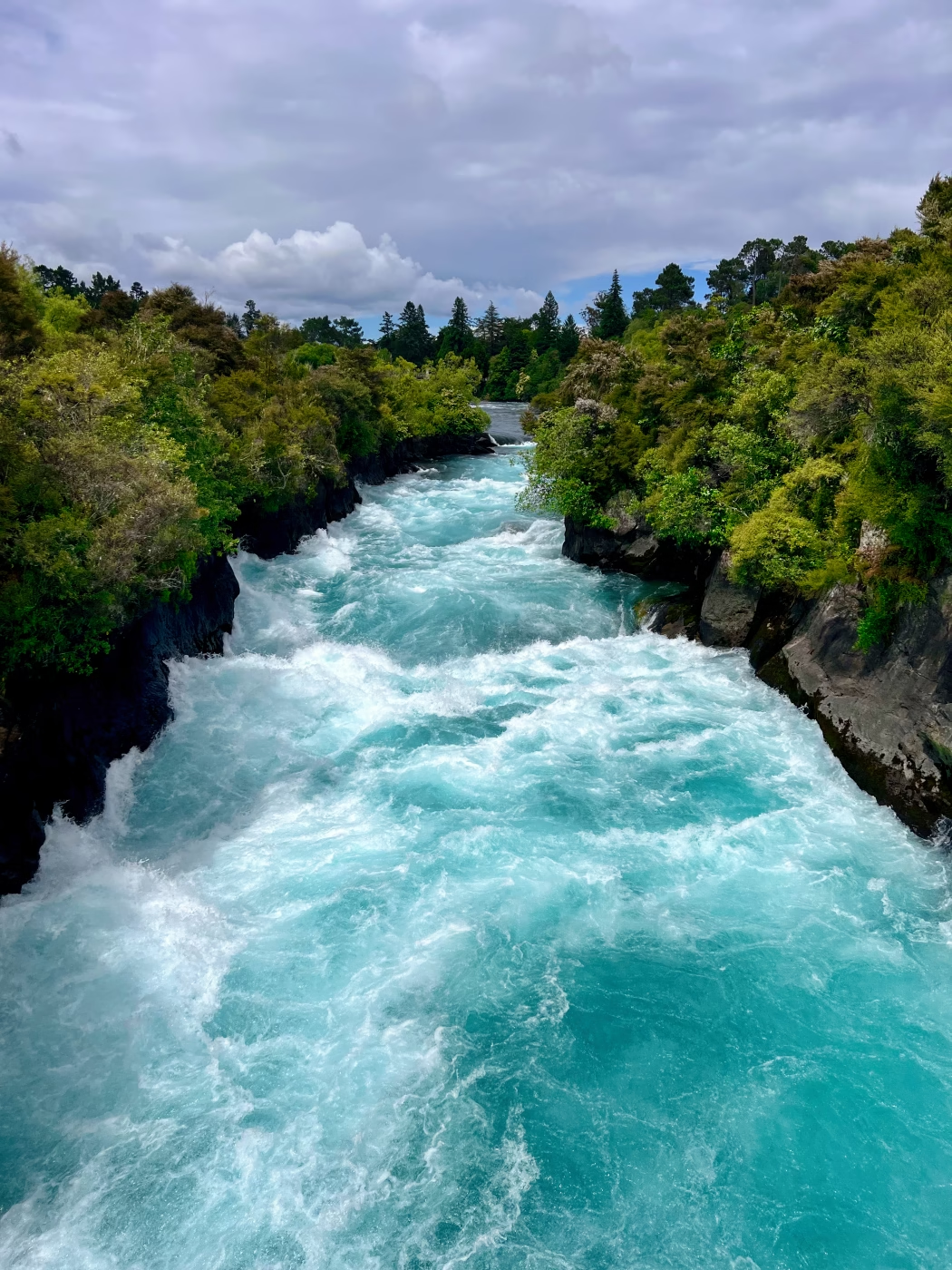
Taupō sits on the shore of New Zealand's largest lake, and Huka Falls is an easy, well-signposted stop just north of town — a short walk from the car park gets you right to the viewpoint. If you're including the Tongariro Alpine Crossing, note that Taupō is a common base for it, but the track itself starts about an hour's drive away, so factor that into your morning. The lakeside walk in town is a good way to stretch your legs after a day of driving, and there are several spots along the water for an easy lunch stop.
Tongariro National Park
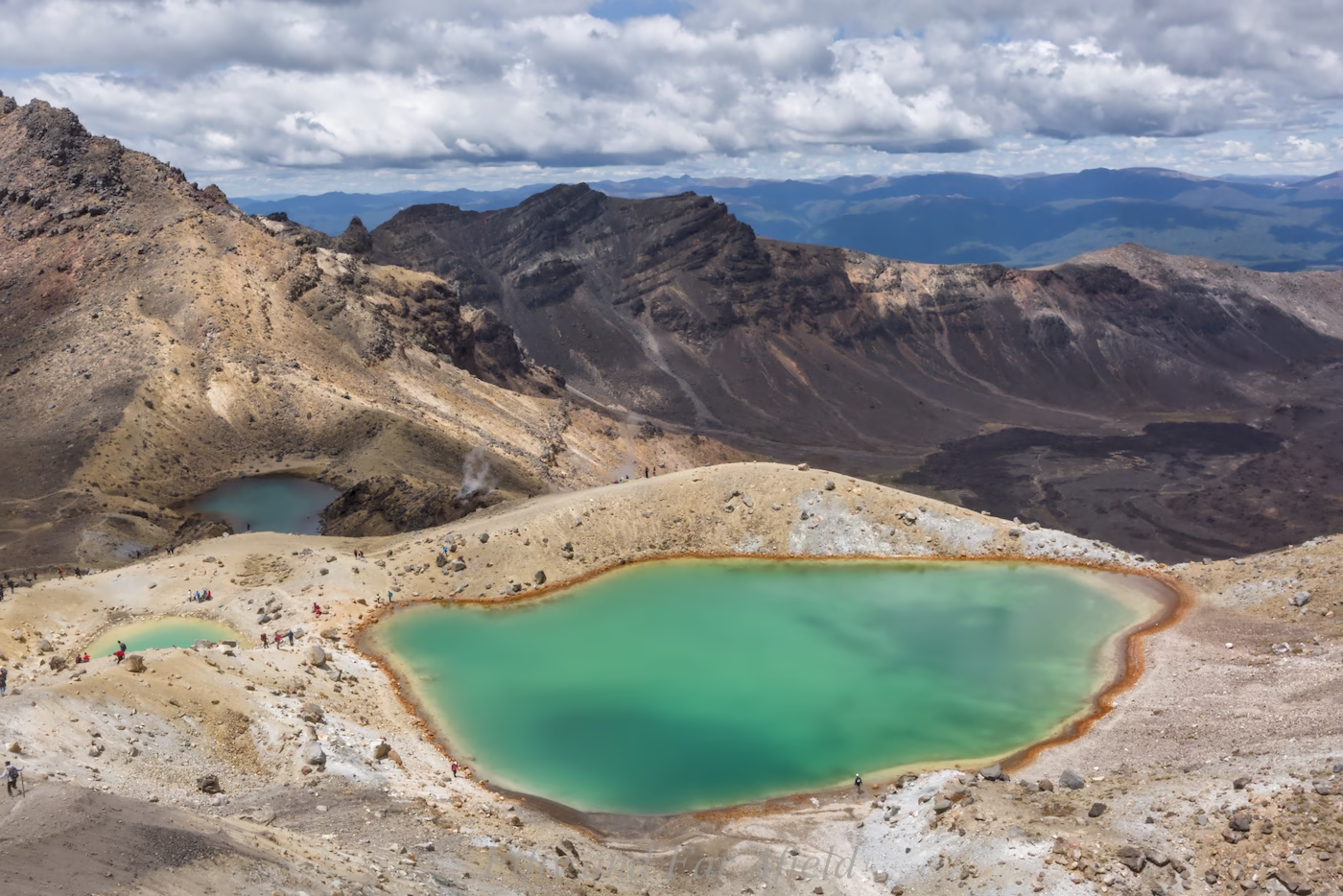
- Tongariro Alpine Crossing — needs good weather and a full day; check conditions before you go on https://tongarirocrossing.com/weather/.
- The Tongariro Alpine Crossing is not a stroll in the park. It requires planning – not just for the walk itself, but for the logistics involved. It's better done as a one-way track, so you'll need to book a shuttle to take you to the start — you finish at a different car park than where you began, so you can't just leave your own car at the trailhead.
Taranaki & New Plymouth
- The Taupō–Taranaki leg is the longest single drive of this itinerary — worth an early start.
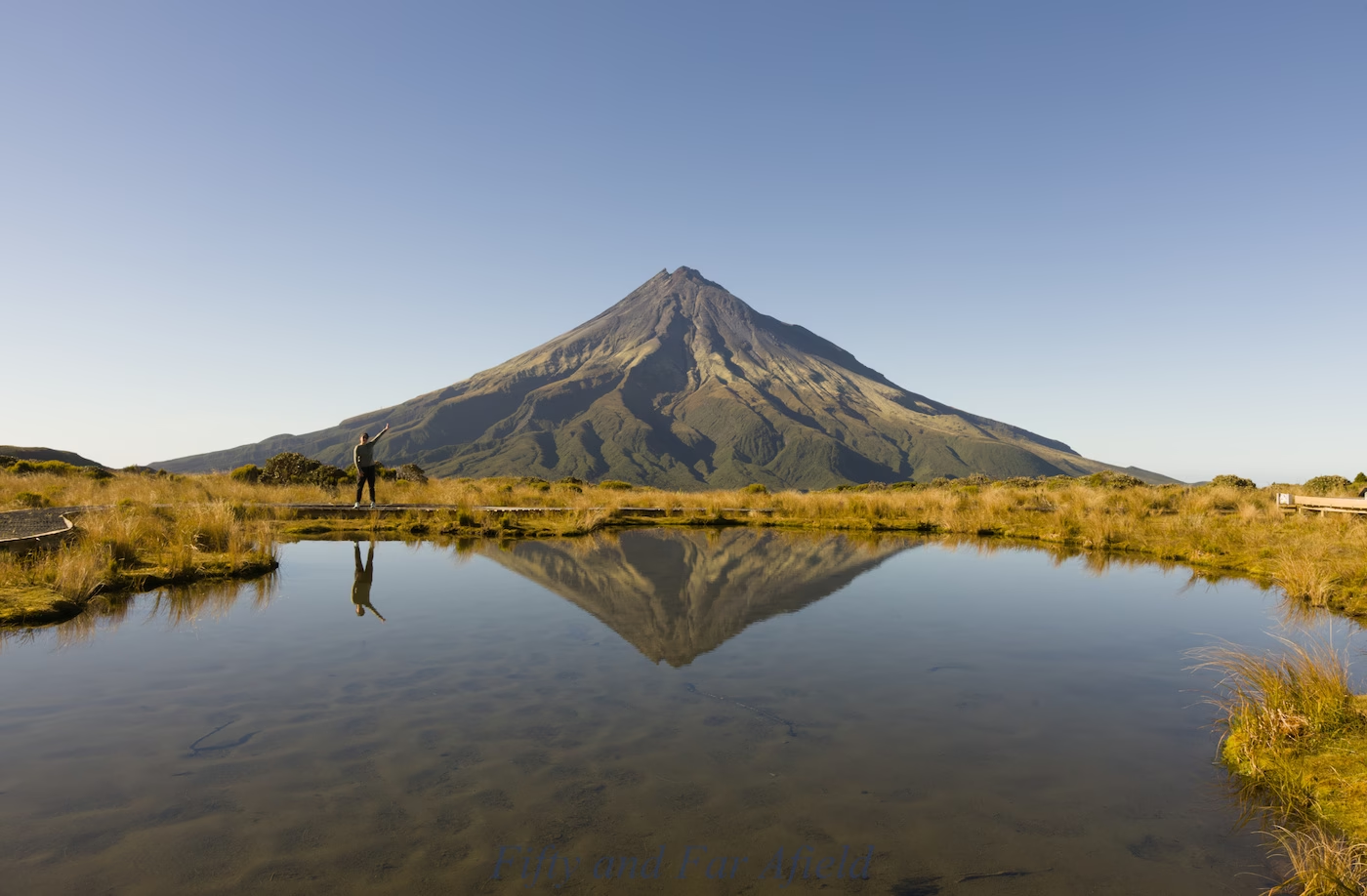
- Taranaki is less touristy than the rest of this route, which makes it a good "quieter" stop if the pace so far has been busy.
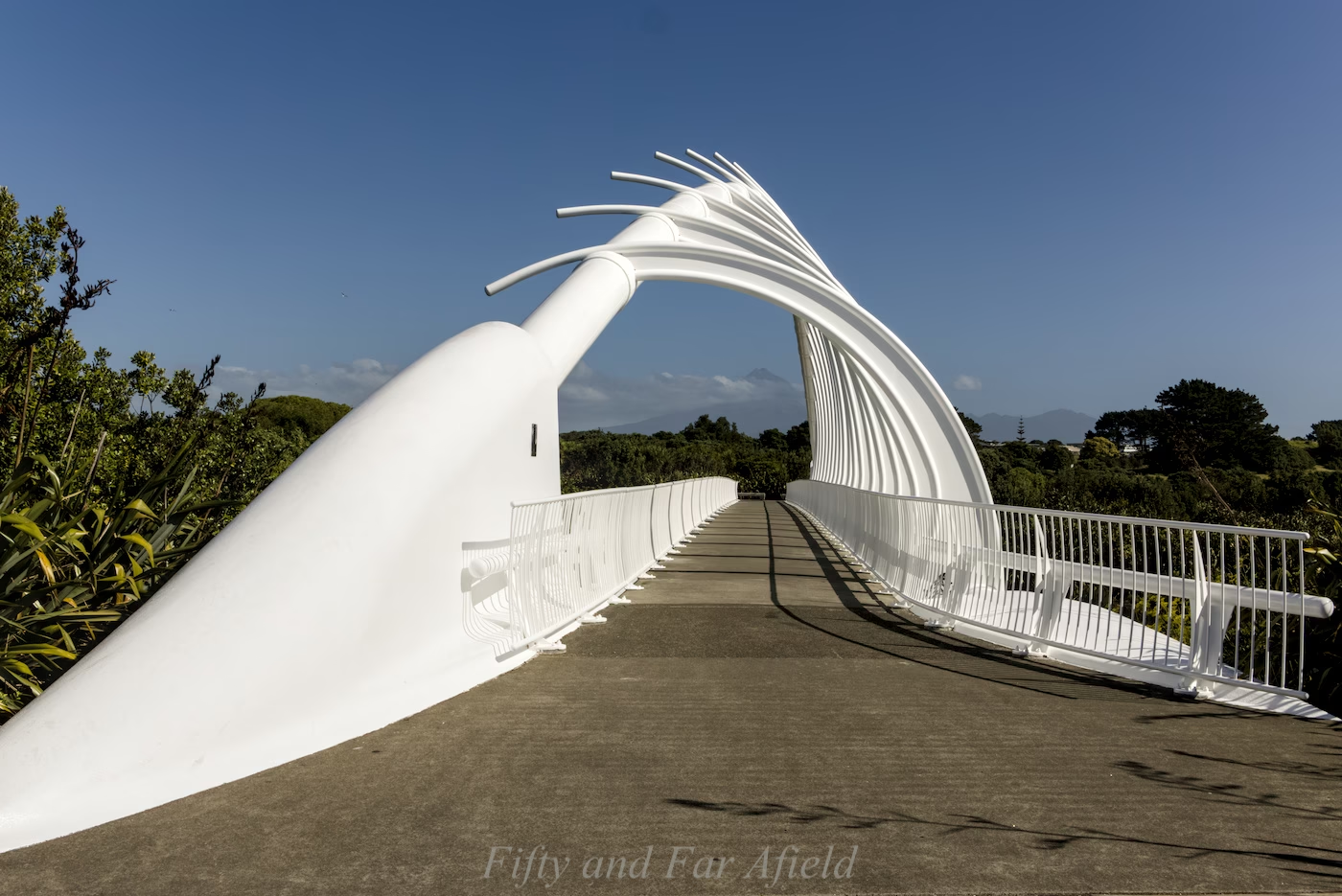
- Taranaki gets more rain than most of the North Island, and the mountain is often hidden in cloud — on my first visit, I didn't see it at all. Check the forecast with MetService (New Zealand's most reliable source) before you go, and build in some flexibility if clear views matter to you. For a deeper dive into the region, see my Taranaki Itinerary: A Relaxed Escape Around Mount Taranaki
- If the forecast for Taranaki looks bad and you haven't locked in accommodation yet, it's worth checking the east side of the island instead — Napier and Hawke's Bay tend to get more sun, and swapping routes on the fly is easy if you're flexible.
14-Day Itinerary
14 Days: The Full Loop
Best for travelers with the most time and flexibility — includes the Bay of Islands in the north, and a decision point near Taranaki depending on whether you're continuing to the South Island.
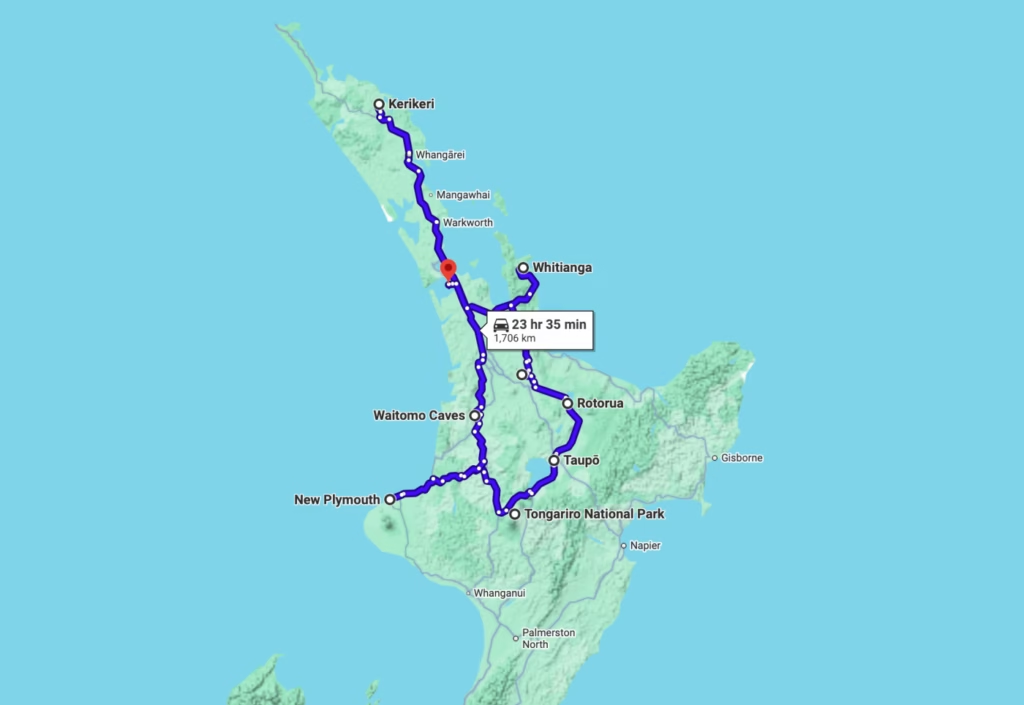
The 14-day North Island New Zealand itinerary loop, linking Kerikeri, Whitianga, Waitomo Caves, Rotorua, Taupō, Tongariro National Park and New Plymouth — 1,706 km and around 23 hours 35 minutes of driving. Map data ©2026 Google.
Route: Auckland → Bay of Islands (Cape Reinga optional) → Auckland (Waiheke optional) → Coromandel → Hobbiton → Rotorua → Taupō → Taranaki → branch: Wellington (via Whanganui) or Waitomo → Auckland
| Day | Route | Driving time | Highlights |
|---|---|---|---|
| 1–2 | Auckland → Bay of Islands | ~3.5 hrs | Beaches, photography stops. Cape Reinga optional (add a day) |
| 3 | Bay of Islands → Auckland | ~3.5 hrs | Waiheke Island optional stop |
| 4–5 | Auckland → Coromandel | ~3 hrs | Cathedral Cove, Hot Water Beach |
| 6 | Coromandel → Hobbiton → Rotorua | ~3.5 hrs total | Hobbiton tour, arrive Rotorua evening |
| 7–8 | Rotorua | — | Geothermal parks, Māori cultural experience, mountain biking |
| 9–10 | Rotorua → Taupō | ~1 hr | Huka Falls, Tongariro Alpine Crossing optional |
| 11–12 | Taupō → Taranaki | ~2.5 hrs | Mt Taranaki, black sand beaches, surf towns |
| 13–14 | Branch A: Taranaki → Wellington via Whanganui | ~4.5 hrs | For those continuing to the South Island |
| 13–14 | Branch B: Taranaki → Waitomo → Auckland | ~5 hrs total | For those staying North Island only |
Which branch to take?
- Continuing to the South Island (Cook Strait ferry): head to Wellington via Whanganui, with a short stop to break up the drive. Fly back to Auckland at the end of your trip if you're not driving back north.
- Staying North Island only: loop back through Waitomo for the Glowworm Caves, then finish in Auckland.
- Optional extension: Napier & Hawke's Bay (art deco architecture, wineries) — for those with extra days beyond 14, or willing to trade a day elsewhere.
Bay of Islands, Kerikeri, Paihia, Russell
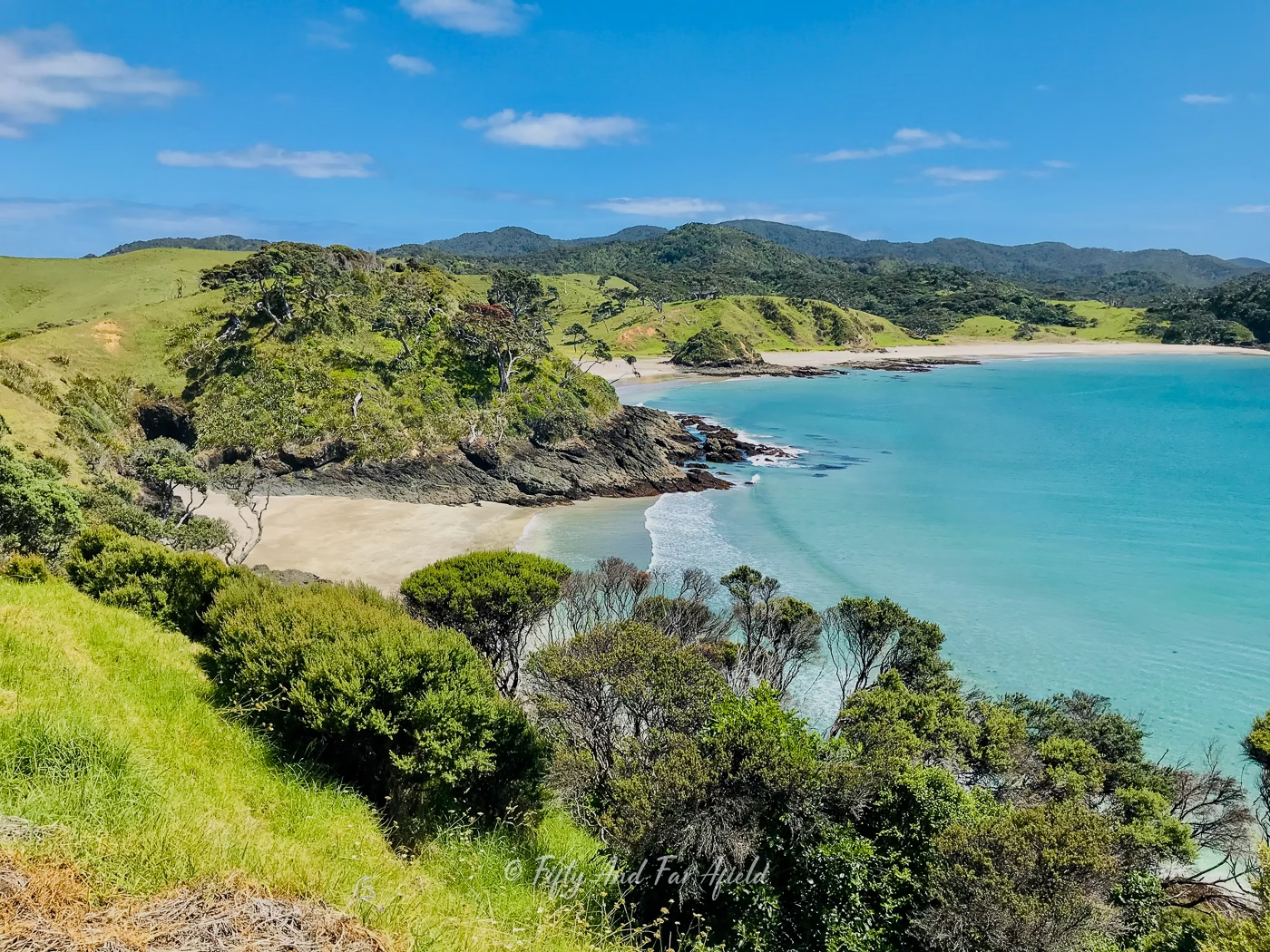
- Bay of Islands — think beach and photography stops.
- The drive up from Auckland is straightforward — mostly SH1, around 3.5 hours without stops, though it's worth breaking the journey up rather than pushing straight through.
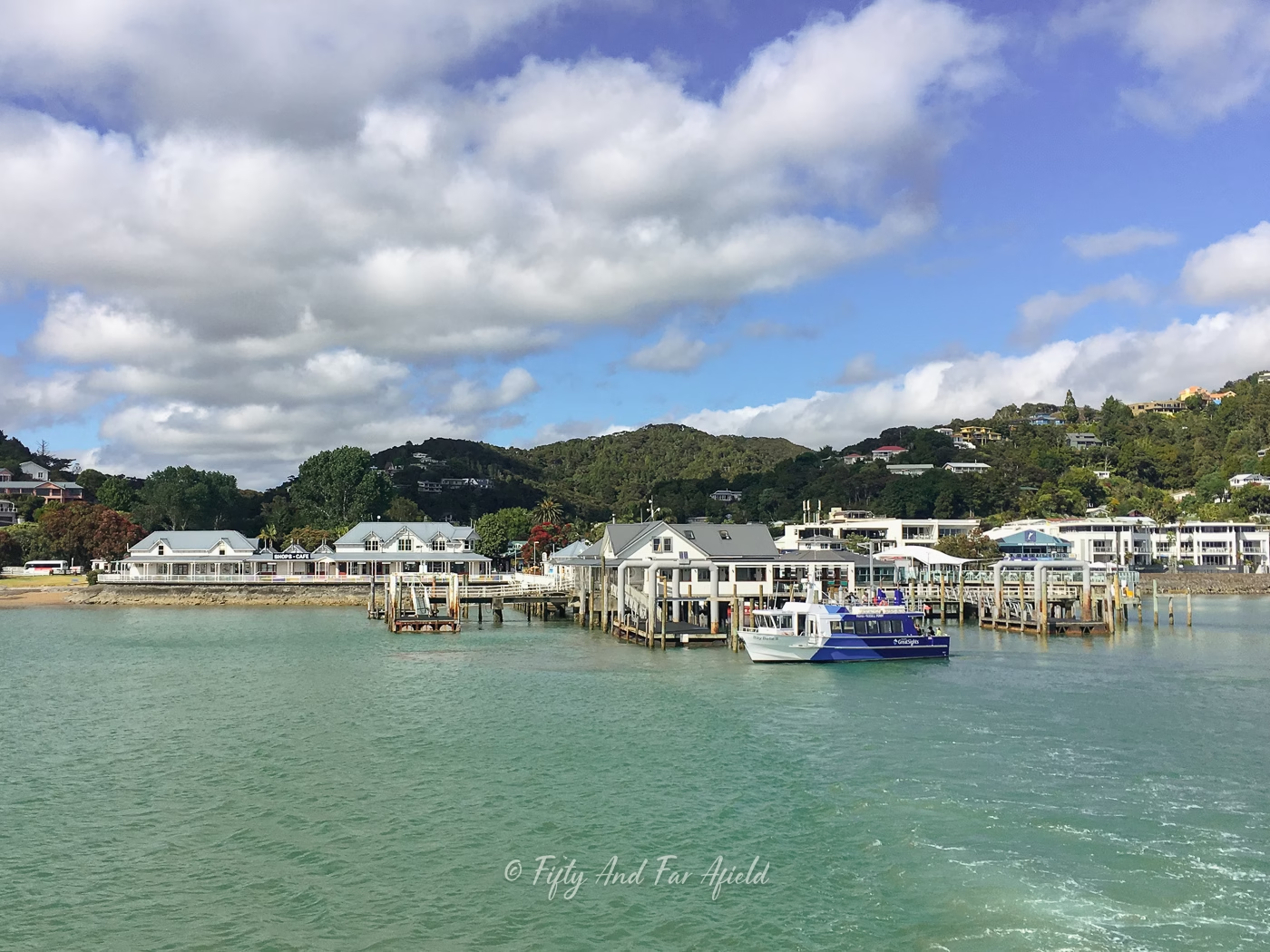
- Paihia and Russell are the two main bases; Paihia has more choice for accommodation and is the easiest base for boat trips and day tours, while Russell across the water is quieter and a nice spot for a meal or a night if you want a change of pace.
- Book accommodation ahead in summer, as this is one of the busier stops on the route.
- For a full breakdown of what to see and do, see my Bay of Islands Travel Guide.
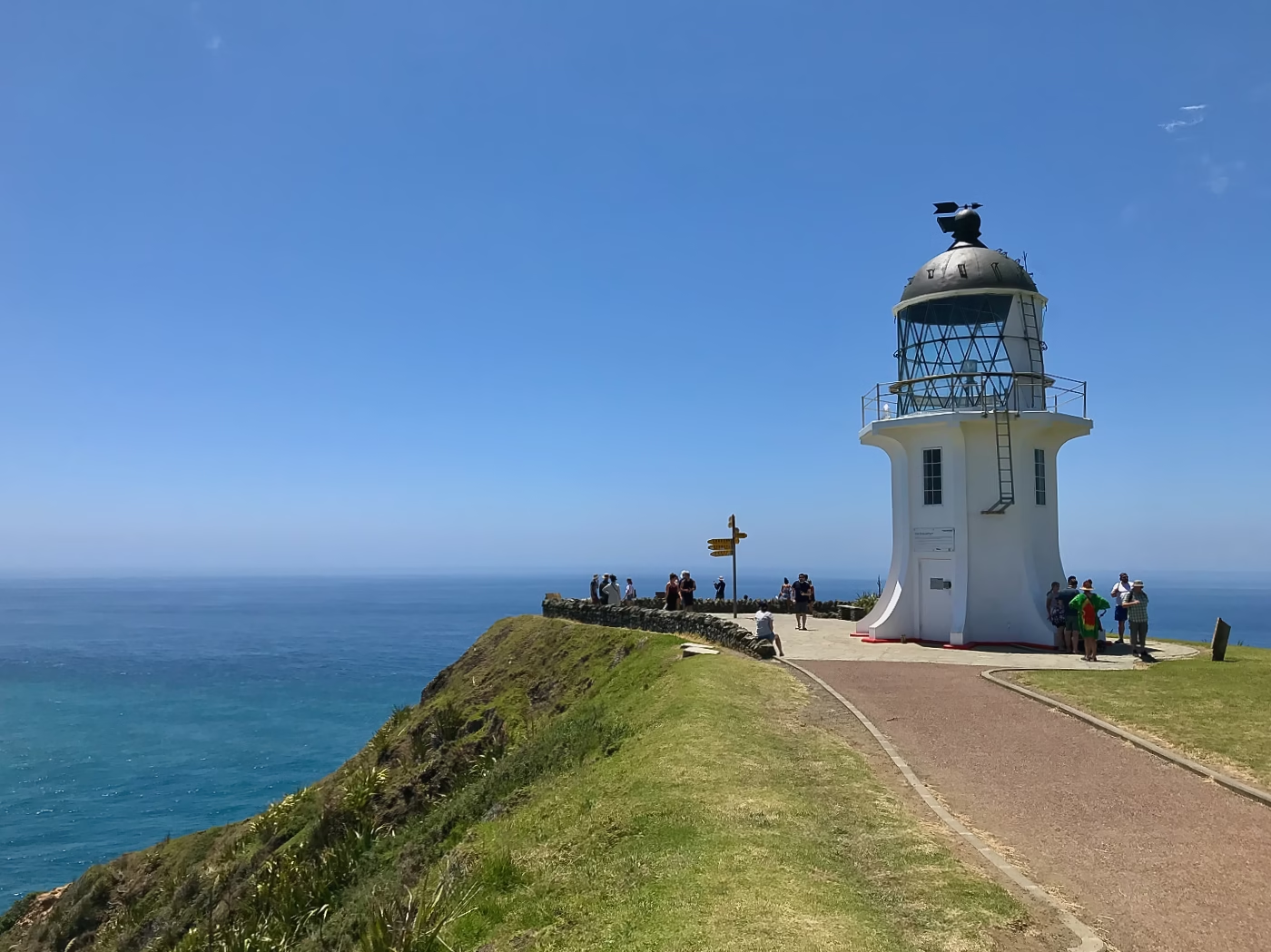
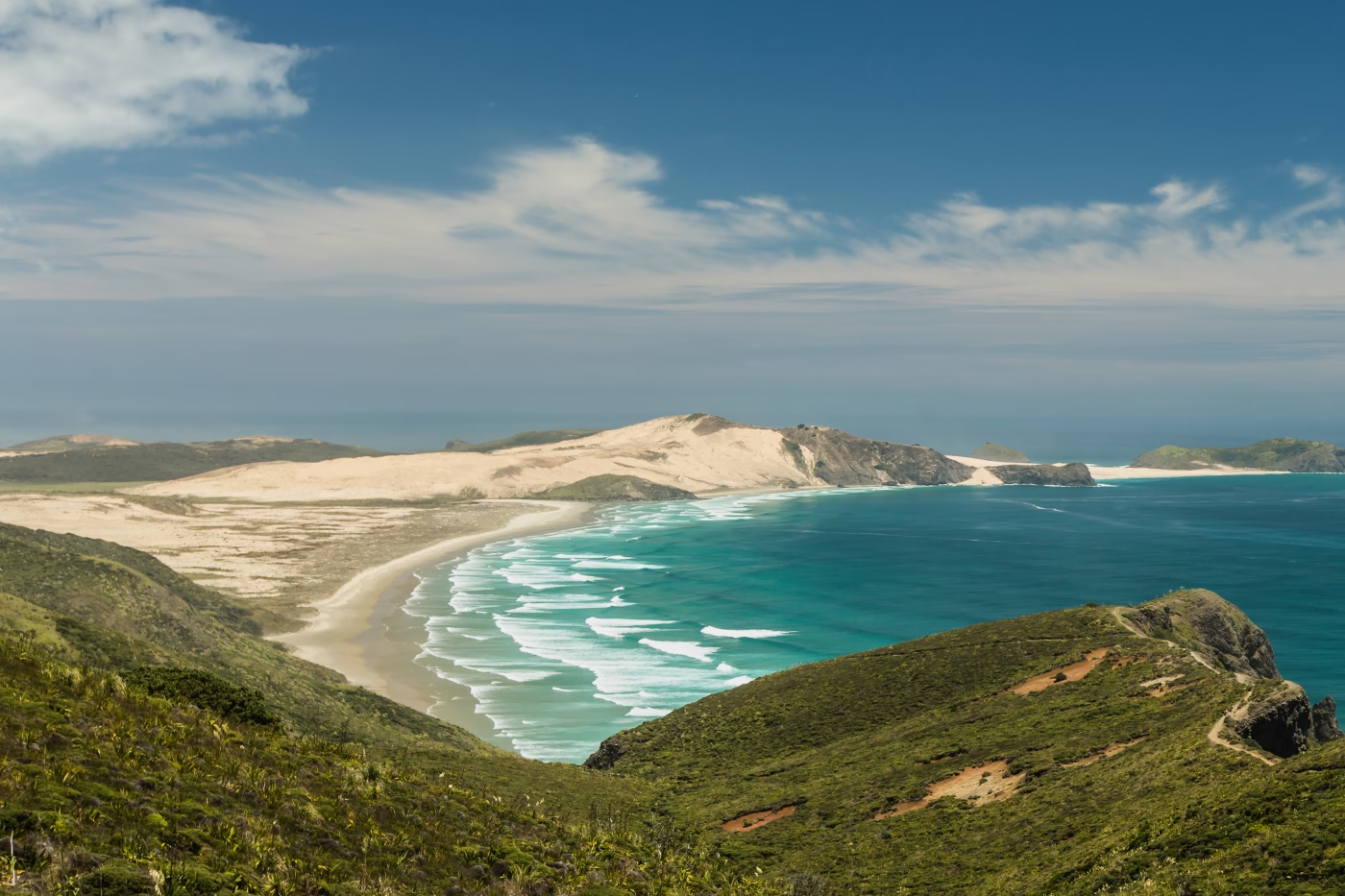
Far North, Cape Reinga
- Cape Reinga
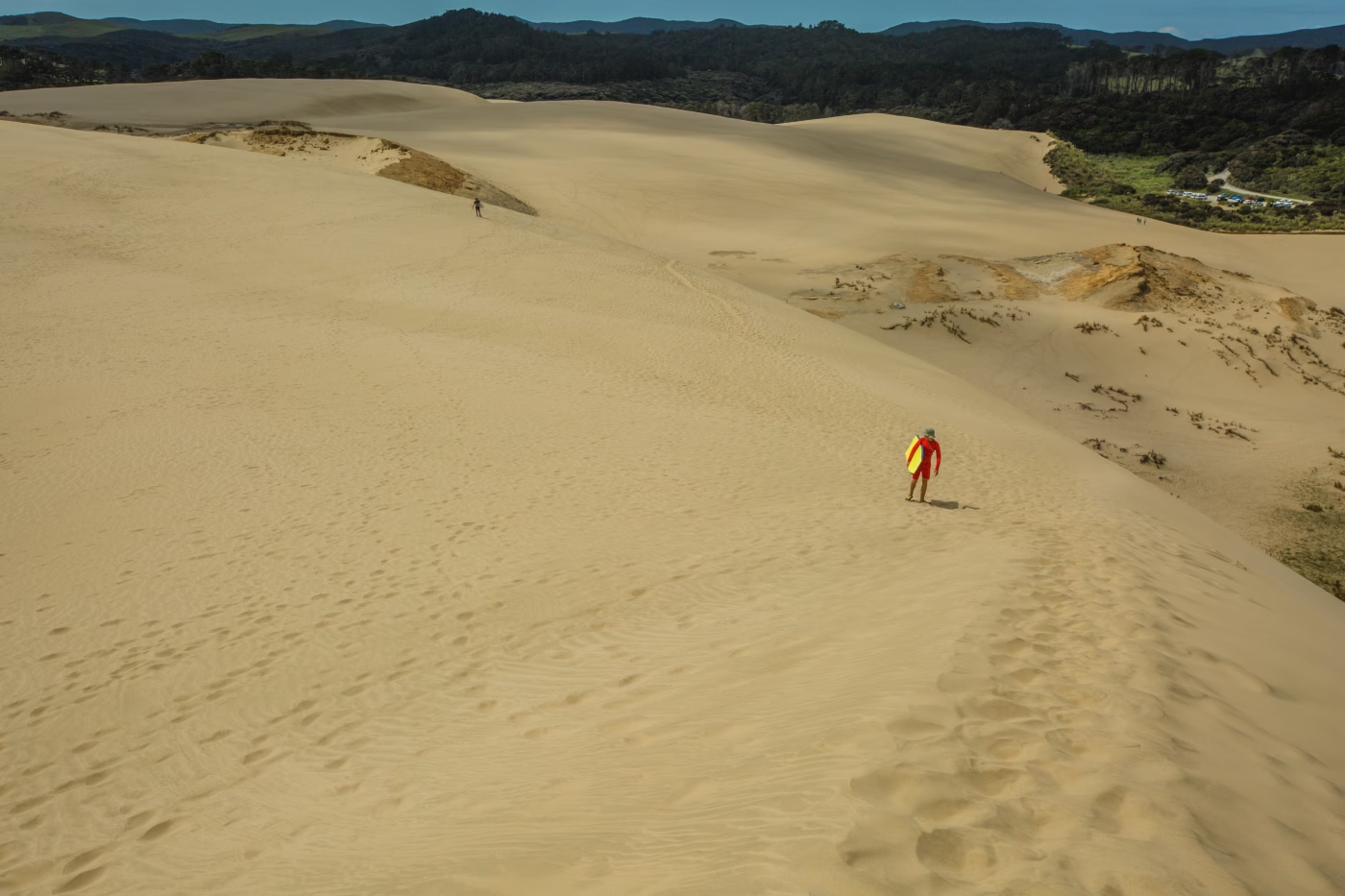
- Stop at the Giant Sand Dunes (Te Paki) on the way, they're spectacular. If you pick up a body board at the start of your trip, sandboarding down them is one of the best unplanned highlights of the whole loop.
- Ninety Mile Beach
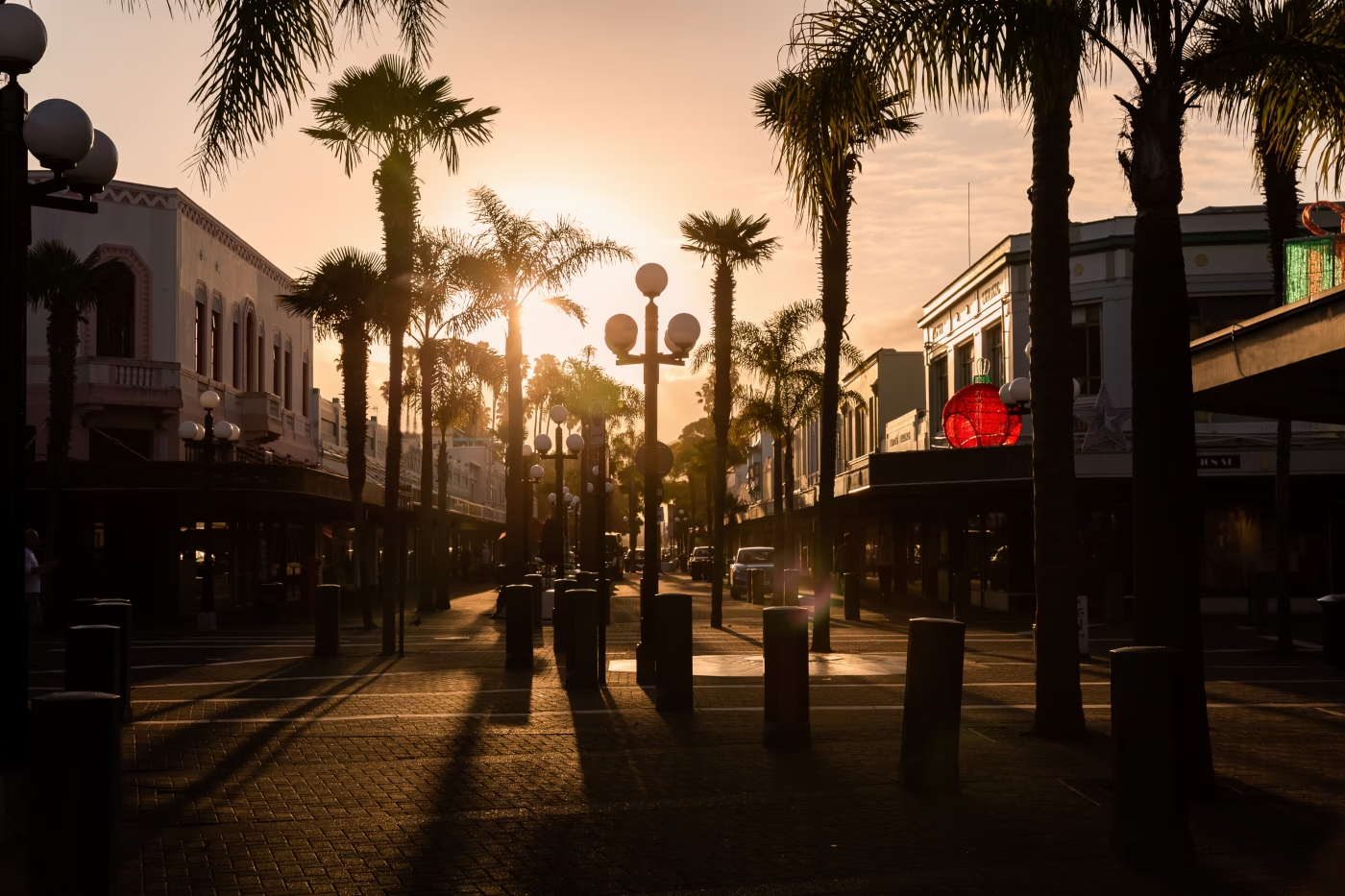
Napier & Hawke's Bay
If you're adding this as an extension,
- Napier is known for its Art Deco architecture — much of the city centre was rebuilt in the style after a 1931 earthquake, and it's compact enough to explore on foot in a morning.
- Hawke's Bay is also one of New Zealand's main wine regions, so it's worth building in time for a couple of vineyard visits or a guided wine tour if that's of interest.
- The region tends to get more sun than Taranaki, making it a good swap if you're chasing better weather (see the note about Taranaki region in the 10-day itinerary). It sits roughly 2–2.5 hours from Taupō and around 4 hours from Wellington, so it works best as a detour rather than a quick stop.
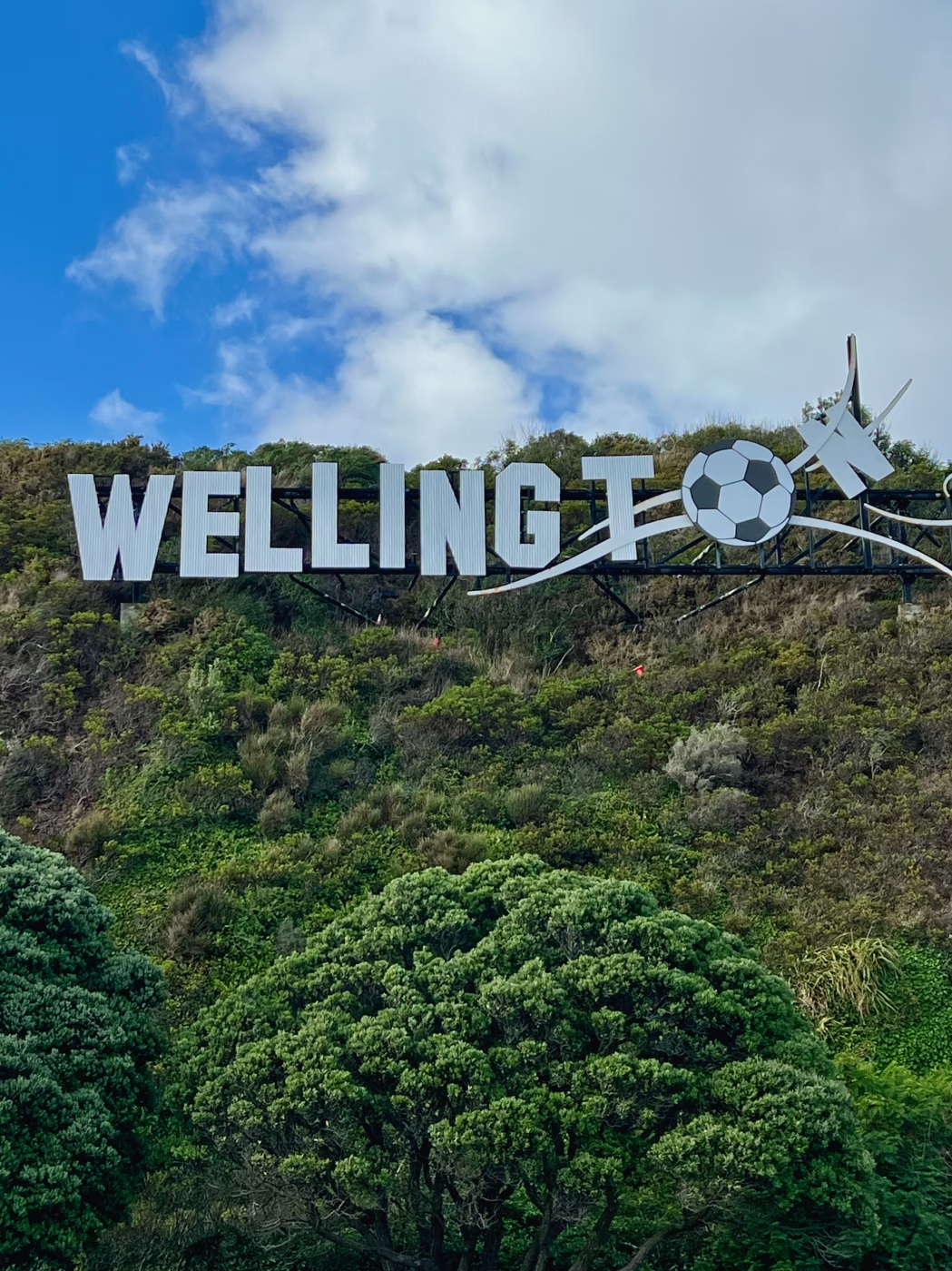
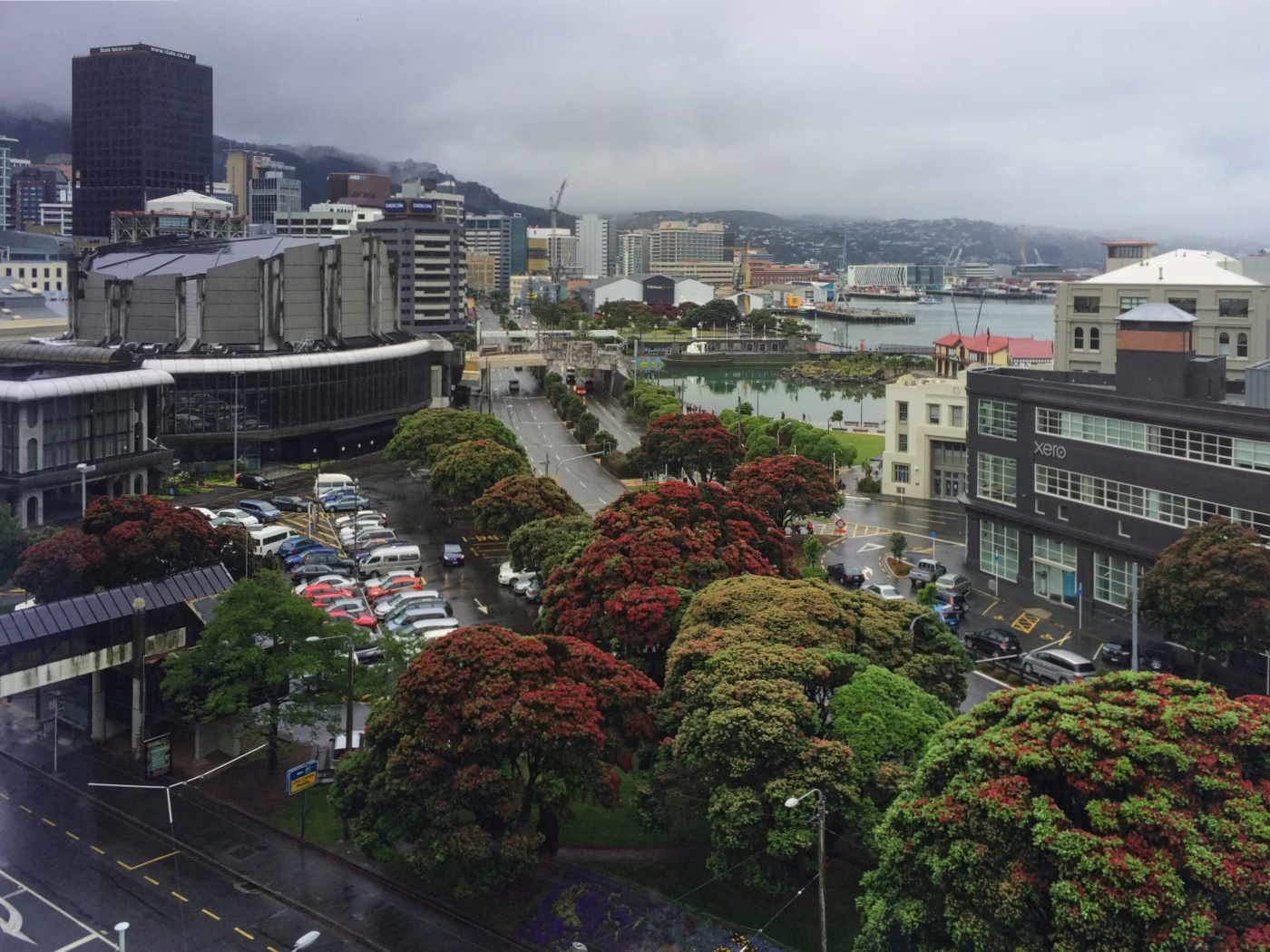
Wellington and the lower North Island
If your route takes you down to Wellington via the Branch A option, it's worth a night or two rather than just passing through.
- Be prepared for Wellington's famously changeable, windy weather — locals joke that you can experience all four seasons in a single day, so pack layers and don't be surprised if your umbrella turns inside out.
- New Zealand's capital is compact and walkable, with Te Papa (the national museum) a good starting point — entry is free for New Zealanders, while international visitors aged 16 and over pay NZ$35, with the ticket valid for 48 hours so you can return the next day at no extra cost.
- The Wellington Cable Car up to the Botanic Garden giving you sweeping harbour views without much effort.
- The city has a strong café and craft beer culture too, concentrated around Cuba Street, if you want an evening that isn't about sightseeing.
- Film fans will also find plenty here — Wellington is the base for Weta Workshop, and the Weta Cave offers a look behind the scenes of New Zealand's film industry for those interested.
- On the way down via Whanganui, it's worth a short stop in the town itself — the Whanganui River and its heritage riverboat give a quieter, more historic contrast to the coastal and volcanic landscapes further north on this route.
- If you're catching the Cook Strait ferry onward to the South Island, book your crossing in advance, especially in summer, as sailings can sell out and weather can affect scheduling. Learn more
Practical Tips for Planning Your North Island Road Trip
When to go
New Zealand's summer (December–February) has the best weather but the biggest crowds and highest prices, especially around Hobbiton and Coromandel. Shoulder season — October/November or March/April — is my pick: quieter roads, easier bookings, and still generally good weather. In fact, you can generally count on good travelling weather right through to April. Winter (June–August) works too if you don't mind shorter days, more rain, and a real chance of missing Mt Taranaki entirely under cloud. For more on planning around New Zealand's conditions and adjusting to travelling here, see my post New Zealand Travel Tips for Women Who Travel Their Own Way.
Booking ahead
A few things on this route sell out or fill up, regardless of which itinerary you choose: Hobbiton tours, the Waitomo Glowworm Caves boat tour, and Cathedral Cove parking/shuttle in peak season. Book these before you leave home, not once you're on the road.
Renting a car
You'll want your own vehicle for any of these itineraries — public transport won't get you to Cathedral Cove or Hobbiton on any kind of workable schedule. Book early in peak season (December–February), and check whether your rental includes unlimited kilometres, since these loops rack up serious distance. A standard sedan is fine for every route above; you don't need 4WD unless you're planning to detour off the highlighted routes.
Driving in New Zealand
If you're not used to driving on the left, give yourself a day or two to settle in — Auckland's roads are straightforward enough, but once you're out on these routes, expect winding, sometimes narrower roads, especially through Coromandel and around Taranaki. Single-lane bridges are common; there's usually clear signage for who has right of way, but slow down and check as you approach. Speed limits are lower than you might expect on open roads, and they're enforced — I say this from experience, so budget extra time rather than pushing to make it up on the road.
Driving times
The driving times in these tables are just that — driving time estimate. Add time for photo stops, fuel, food, and simply not rushing. If a day shows 3.5 hours of driving, treat it as most of your day once you factor in everything else.
Toll roads
New Zealand has only three toll roads, and all of them are on the North Island. Fees are small — $2.10 to $2.60 for a car — and every toll road has a free alternative route, so tolls are easy to avoid altogether if you'd rather. There are no toll booths; cameras read your number plate automatically, and you have 5 days to pay online at tollroad.govt.nz or at select service stations. If you're in a rental car, check with your rental company first, as many handle this automatically or offer a toll package.
A Survival Tip for the Road 🤢
New Zealand's roads are stunning—but be prepared for plenty of twists and turns, especially on the coastal and mountain stretches. If you suffer from motion sickness like I do, don't forget to pack your trusted meds or those acupressure wristbands. They've been a lifesaver for me on plenty of winding drives around the country!
Navigation and connectivity
Download offline maps (Google Maps lets you save regions) before you set off, since mobile coverage drops out in places like the Coromandel Peninsula and parts of Taranaki. A local SIM or eSIM is worth sorting at Auckland Airport on arrival.
Sun Smart Tip ☀️
New Zealand's sun is much harsher than you might be used to elsewhere — on sunny days around midday, you can feel your skin burning within minutes if you're not using sunscreen. Even on mild or overcast days you can get sunburnt too — I've experienced it myself, so don't let a cloudy sky fool you into skipping it. High-SPF sunscreens are widely available in most shops, and hats can be picked up at most pharmacy stores if you didn't bring one — worth grabbing both early in your trip rather than after you've already caught the sun.
Packing
New Zealand weather changes fast, even in one day. Layers, a proper rain jacket, and sturdy shoes matter more than anything stylish — you'll be glad of them at Cathedral Cove, the Tongariro Crossing, or anywhere near Taranaki.
Budget & Cost Estimate
These are rough guides, not quotes — prices shift with season, how far ahead you book, and your own style of travel. But they should help you ballpark what each itinerary will cost.
Car rental
Expect around $60–$120 per day for a standard sedan, more in peak season (December–February) or if you book late. Over a 7-day trip that's roughly $420–$840; for 14 days, $840–$1,680. Fuel adds another $15–$25 per 100km, and these routes cover a fair bit of ground — budget $250–$400 in fuel for the 7-day loop, and closer to $450–$700 for the full 14-day loop.
Accommodation
This is the biggest swing factor. A comfortable mid-range room (motel, B&B, or a good Airbnb) runs $150–$250 per night; budget options can bring that down to $100–$150, while higher-end lodges and boutique stays push well past $300. Across a 7-day trip, that's roughly $900–$1,750 for accommodation alone; for 14 days, $1,800–$3,500.
Activities and attractions
The bookable highlights add up: Hobbiton tours run around $115–$130 per person, the Waitomo Glowworm Caves boat tour is around $65–$85, and geothermal parks in Rotorua are typically $45–$65 each. If you're doing the Tongariro Alpine Crossing, the shuttle alone is around $45–$55 per person, on top of any guided option. Budget $300–$500 per person for activities on the 7-day loop, and $450–$700 for the 14-day version with more stops included.
Food
A realistic daily food budget is $60–$100 per person if you're mixing cafés, the odd nice dinner, and self-catering some meals — supermarkets are well stocked in every town on this route, and buying a few groceries for lunches and snacks stretches your budget noticeably further than eating out for every meal.
Rough total per person
- 7-day loop: approximately $1,800–$3,000
- 10-day loop: approximately $2,600–$4,200
- 14-day loop: approximately $3,600–$5,800
These ranges assume two people travelling together and splitting car and accommodation costs. Travelling solo will push per-person costs higher, mainly due to accommodation.
Want this as a printable PDF? Grab the free planner below.
FAQ
Is 7 days enough to see the North Island?
It's enough to see the highlights without feeling rushed on any single day, but you will be moving most days. If you can stretch to 10, the extra time mostly goes toward Taranaki and a bit more breathing room around Rotorua.
What's the best time of year to do this trip?
Shoulder season (October–November or March–April) offers the best balance of good weather, thinner crowds, and easier bookings — and you can generally count on good travelling weather right through to April. Winter brings more rain and a higher chance of missing views like Mt Taranaki under cloud.
Can I do this trip without a car?
Not really, not as written. These routes are built around driving flexibility — buses exist between major towns, but you'd lose most of the stops in between, which are half the point.
Is driving in New Zealand difficult for overseas visitors?
It takes a bit of adjustment, mainly driving on the left, winding roads outside the main centres, single-lane bridges, and lower speed limits than many visitors expect — and yes, they are enforced. Budget extra time rather than trying to make it up on the road.
Do I need a 4WD vehicle?
No — every route above is doable in a standard rental car on sealed roads.
Is this a good trip to do solo?
Yes — all three routes are well set up for solo travel, with good accommodation options and no stretch that requires a second driver or companion.
Do I need to book everything in advance?
Not everything, but a few things: Hobbiton, the Waitomo Glowworm Caves boat tour, and Cathedral Cove access/parking in peak season. Accommodation is worth locking in during summer too, especially in places like Coromandel and Bay of Islands.
What if the weather doesn't cooperate at Mt Taranaki?
It's common — Taranaki gets more cloud cover than most of the North Island. Check MetService before you commit to viewpoints or hikes, and if it looks bad, Napier and Hawke's Bay on the east coast tend to get more sun (see the 10-day itinerary for more on this swap).
Should I extend to the South Island?
Definitely, if mountains and fiords are your thing. I love flying down there myself and heading straight out for hikes — the scale of the landscape is something else. The coastline is spectacular too, though fair warning, the ocean is noticeably colder than up north. If you have more than 14 days, or you're willing to trade a day from this itinerary, the Cook Strait ferry from Wellington is the natural bridge — see the branch point in the 14-day itinerary above. I'm also working on a separate South Island Itinerary post — keep an eye out for it if you want to plan that leg in more detail.
How much should I budget for this trip?
Roughly $1,800–$3,000 per person for the 7-day loop, $2,600–$4,200 for 10 days, and $3,600–$5,800 for 14 days, assuming two people travelling together and splitting car and accommodation costs. See the Budget & Cost Estimate section above for the full breakdown.
What's the best way to book accommodation?
Booking.com and Airbnb both cover New Zealand well. For something more local, Bookabach — a Kiwi holiday-home platform — is worth checking, especially in beach towns, though watch for separate cleaning fees and check what's supplied, since many baches expect you to bring your own beach towels and basics.
Wherever you land on the map — the tight 7-day loop, the extra breathing room of 10 days, or the full 14-day version with Bay of Islands and beyond — the North Island rewards a bit of flexibility. Some of my best memories from this route weren't the big-ticket stops, but the moments in between: an unplanned sandboarding run down the dunes at Te Paki, a quiet morning at Cathedral Cove before the crowds arrived, a clear day at Taranaki when I'd braced for cloud. Build in some slack where you can, check the weather as you go, and let the road surprise you a little. If you end up putting your own spin on this loop, I'd love to hear how it went.
Recent Comments